
|
|
DEFINITION. Pedal osteitis is a demineralization of the third phalanx as the result of inflammation. It may also manifest itself as a roughness on the borders of the third phalanx, most commonly on the lateral wings.
ETIOLOGY. Persistent inflammation of the foot, due to numerous causes, may cause rarification of the third phalanx. Chronic bruising of the sole, persistent corns, laminitis (especially from concussion road founder), puncture wounds and other inflammations over a long period of time may cause the disease. In some cases of osteitis there is actually an osteomyelitis present. Whenever an infected corn or a puncture wound causes damage to the third phalanx, this is the case. Other causes, such as laminitis or persistent sole bruising, are not infectious causes of pedal osteitis.
O.R. Adams, D.V.M.,M.S. 2nd Edition. (1973) Lea & Febiger |
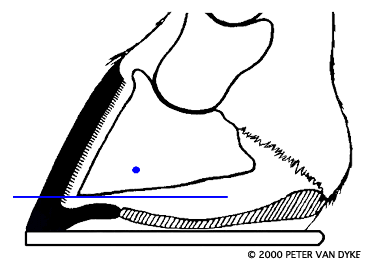 This discussion focuses on the form of pedal osteitis caused by chronic inflammation of the distal border of PIII. A combination of conformation, disease and poor shoeing practices often conspire to produce this form of pedal osteitis.
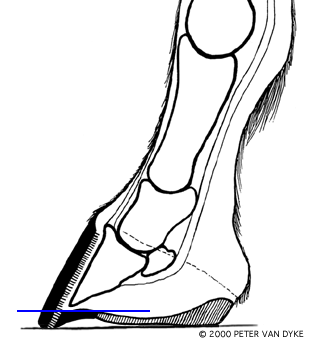
The illustration at the right shows a normal hoof of good conformation. The distal border of PIII is well "up" in the hoof capsule (indicated by the blue line). The sole is realtively thick and concave.
|
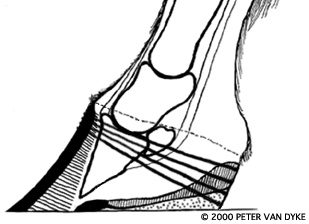
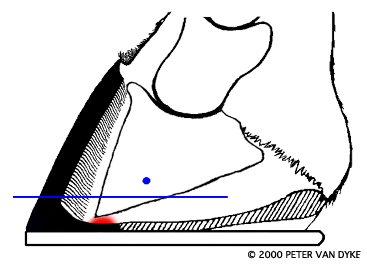 This illustration shows a foundered hoof. The blue line is at the same elevation as in the illustration above. Notice that the sole is no longer concave and that the space between the distal border of PIII and the sole is narrower. The distal border is closer to the environment and has less proection from the environment. This circumstance is likely to result in chronic bruising of the tip of PIII and lead to pedalosteitis.
|
|
|
|
|
|
|
|
|
|
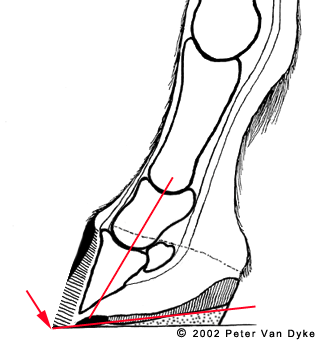
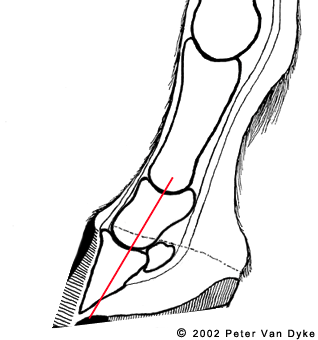
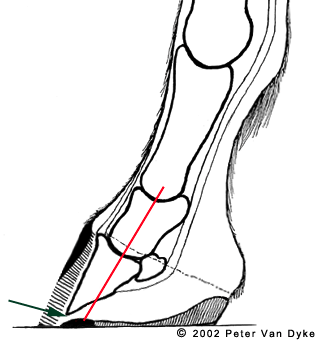
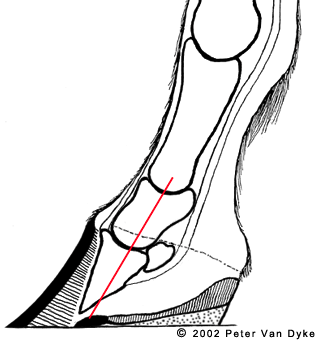
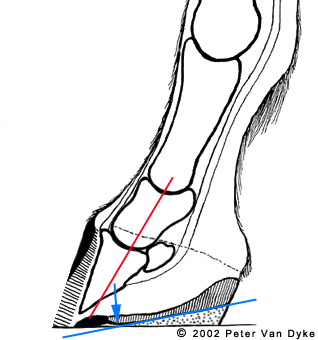
This puts the distal border of PIII unnecessarily close to the ground or shoe (green arrow) |
|
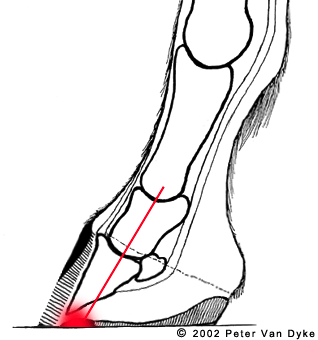
|
|

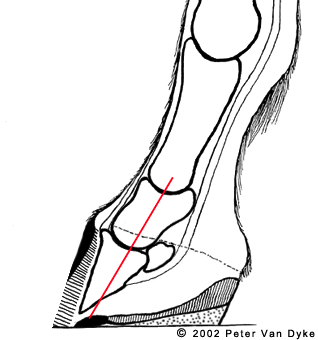
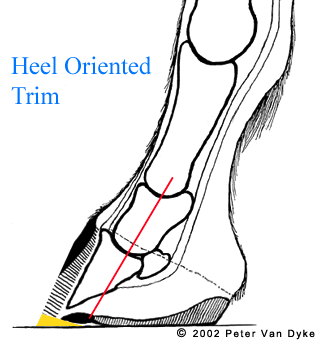
The tip of PIII is not so close to the ground. In fact, it is slightly elevated (the yellow area represents space). |
|
Notice the slight improvement in phalangeal alignment as well
|
|
|
|

© Copyright MMII Peter Van Dyke