What is Derotation?

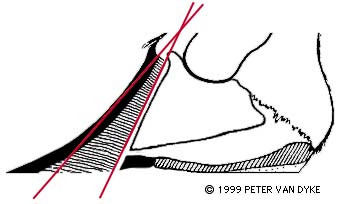 Founder is measurable movement of P3 within the hoof capsule. When we speak of "degrees of rotation" we are referring the number of degrees P3 has rotated relative to the dorsal (front) surface of the natural hoof wall. This is a permanent anatomical change often characterized by a "dished" contour of the dorsal hoof wall. P3 rotates when the dorsal laminae stretch and/or tear. The once highly structured "lamellar space" (sensitive/insensitive lamellar interface) becomes disorganized scar tissue (keratinized stretched laminae) sometimes called the "lamellar wedge". The dorsal aspect of the coronary plexus becomes "pinched" or compressed by displacement of other tissues which have been "dragged" downward along with P3 as it rotated (See FAQ "Why do foundered hooves dish?"). This circumstance creates local pressure ischemia (inhibited local blood flow) and therefore inhibited hoof growth in the dorsal region of the hoof wall. The heels continue at their regular growth rate because greater structural flexibility in the heel region allows greater lamellar tissue expansion minimizing the congestive efffect of inflammation in this region. The heels may even experience accelerated growth rates in response to inflammation during acute disease.
DEROTATION
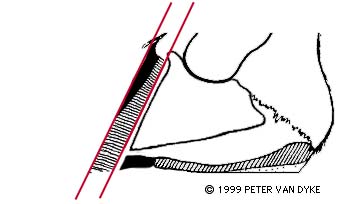 Shaping the hoof giving the impression that P3 is once again in its normal position is referred to as derotation. This technique may make the hoof appear more normal cosmetically, from the outside, but does not alter internal (damaged) anatomy at all. P3 remains in a foundered position relative to the hoof capsule. The only way P3 can be returned to its normal position is through resection and alternat P3 support until a new hoof wall grows.
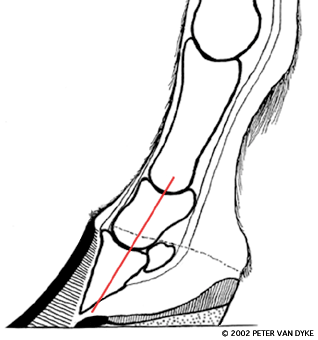
Move your mouse over the image
While "derotation" (when properly applied) does benifit the hoof by restoring more normal pastern alignment and increased distance between the distal border of P3 and the ground, it does not "undo" founder.

© MMII Peter Van Dyke
|